

Virtual Exhibition - Tree
In recent weeks, everything has been leafing and blooming in our gardens and parks, so we dedicate this virtual exhibition to portraitists of trees in the Western tradition.
Although elements of landscape can also be found in antiquity, it mainly serves as a background for some other events. During the Middle Ages, the landscape almost disappeared, except in the depictions of the Garden of Eden or the Madonna in the rose garden, and from the 15th century it began to figure again in pastoral, religious and mythological scenes or in depictions of the months and the works that accompany them. The first studies of trees also appeared, for example by Altdorfer, Dürero or Titian. Landscape was affirmed as a separate theme in the 16th century in Dutch painting, and since then great portraits of trees have appeared.
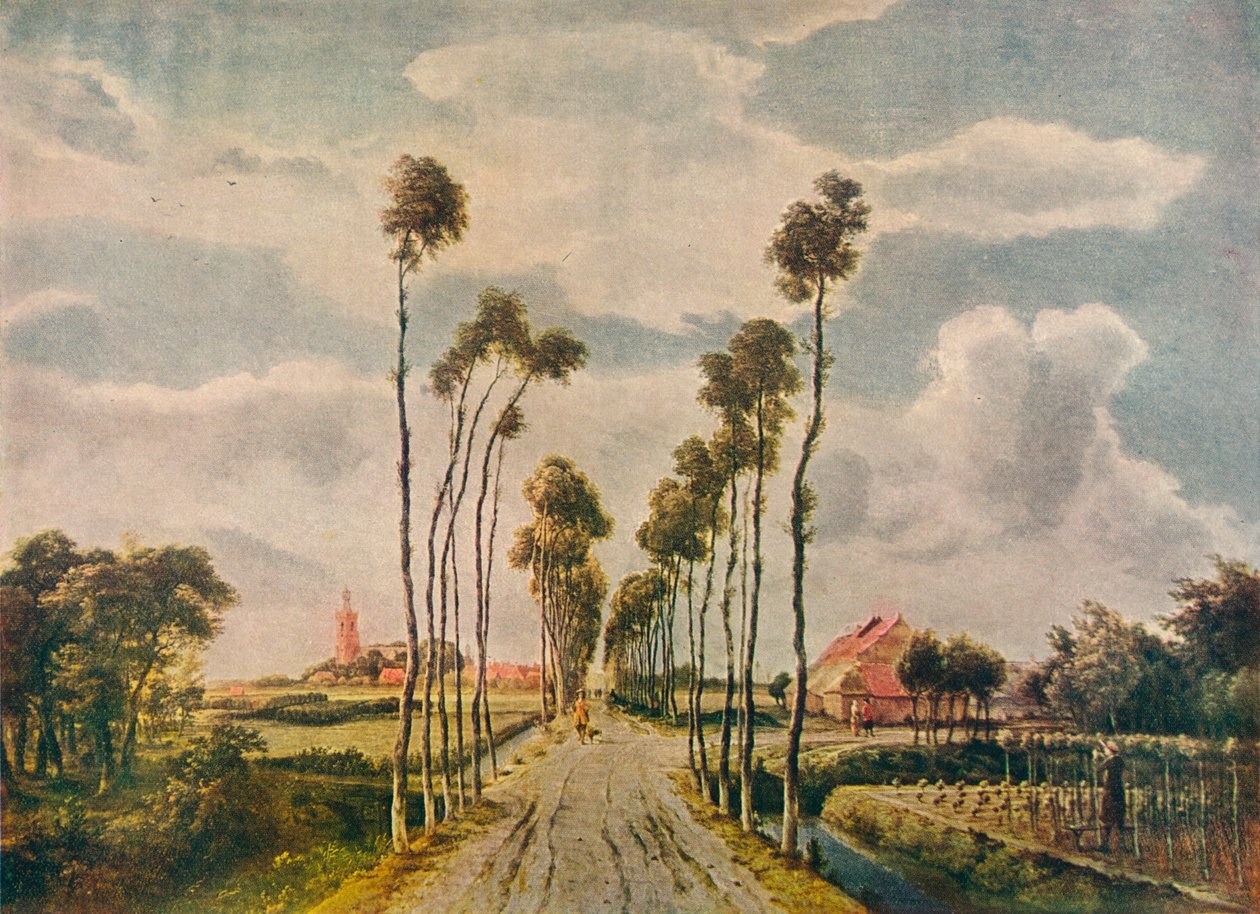
Jacob von Ruisdael can be singled out as probably the greatest and most influential in the history of painting in the 17th century. He left an extensive oeuvre and typologically very diverse landscapes, and one of the characteristic motifs are dramatic depictions of trees along water surfaces, with oaks and birches stretching their branches towards the wide sky, some in full force, some already bare and demolished. The depiction of wild and lush nature thus carries a kind of memento mori. Ruisdaele's pupil Maindert Hobbema gave one of the most striking depictions of alleys (alder) in the painting The Avenue in Middelharnis, which had an exceptional influence on later painters. Claude Lorrain, a Frenchman in Italy, painted many works on the theme of "landscape with ...". The landscape dominates the painting, and some mythological, possibly biblical or bucolic scene is hidden in it. Lorrain was one of the first to sketch in nature, and he also introduced the characteristic motif of the sun's rays shining through the treetops
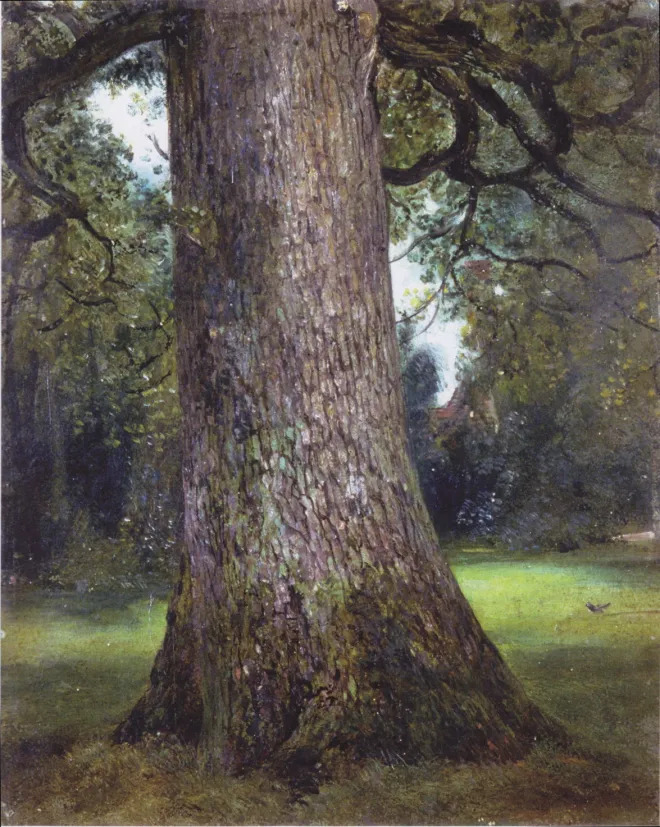
During Romanticism, nature generally became a favorite motif, but not only as a beautiful viewpoint, but also acquired a spiritual and symbolic, even mystical meaning. Caspar David Friedrich painted magnificent mountain landscapes, and the portrait of a bare and almost dead tree in the snow still evokes its strength and powerful energy. In addition to many paintings of the forest and individual trees, John Constable also made a number of fascinating studies of tree trunks, capturing their tectonics and textures, reflections and shades of color.
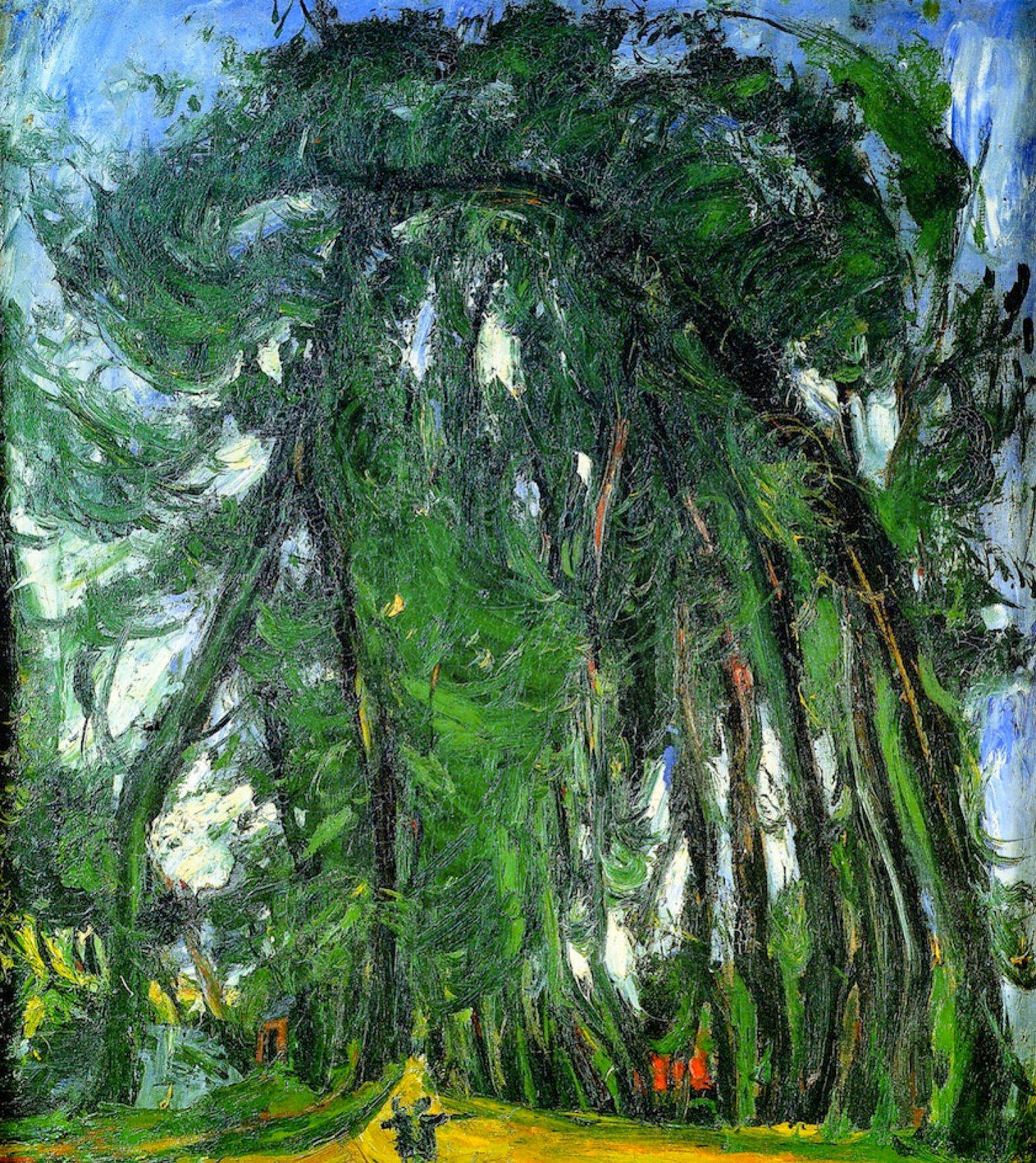
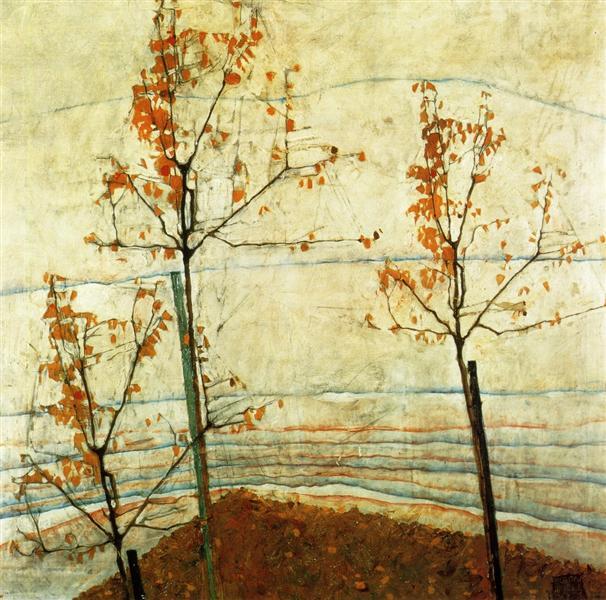
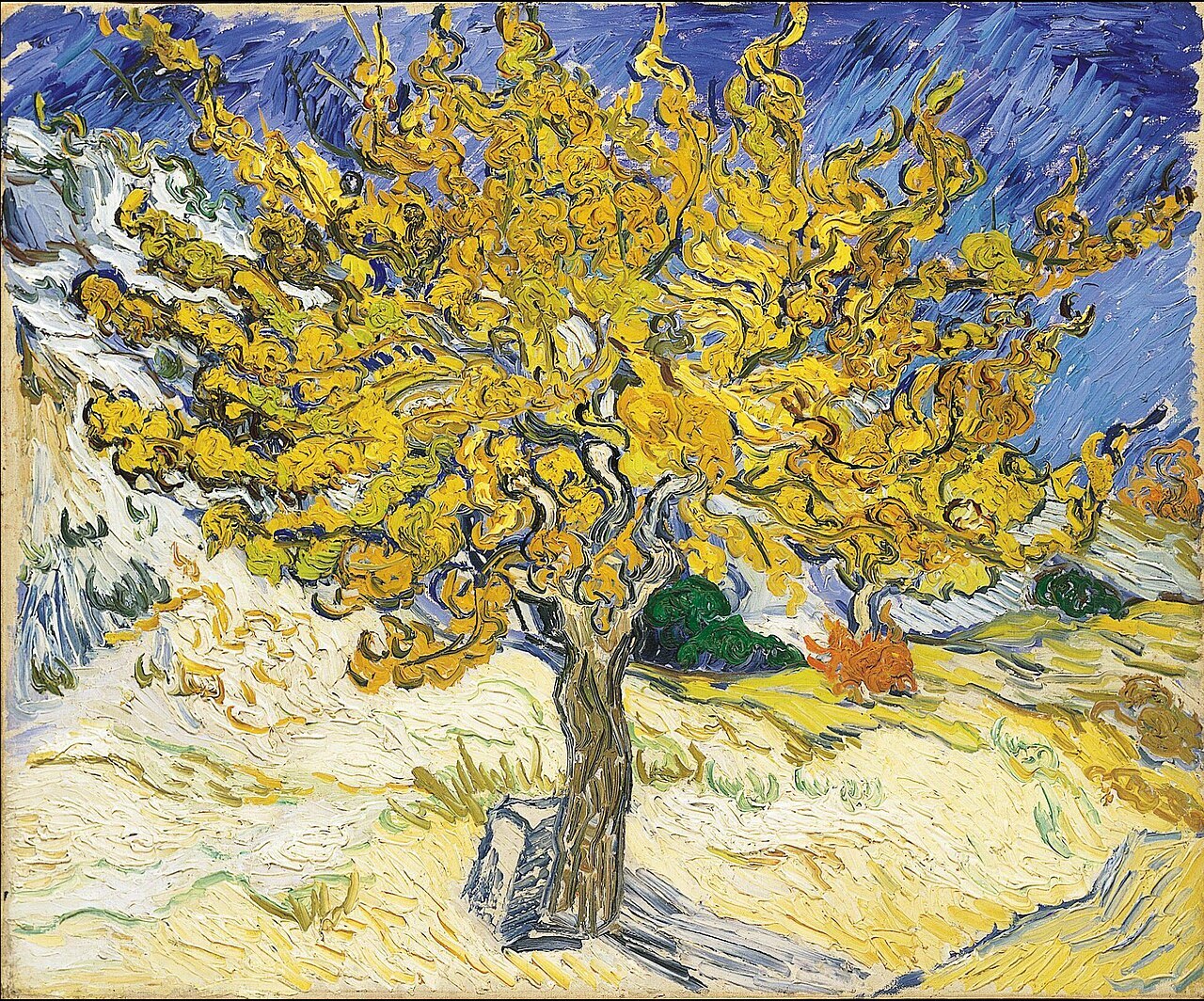
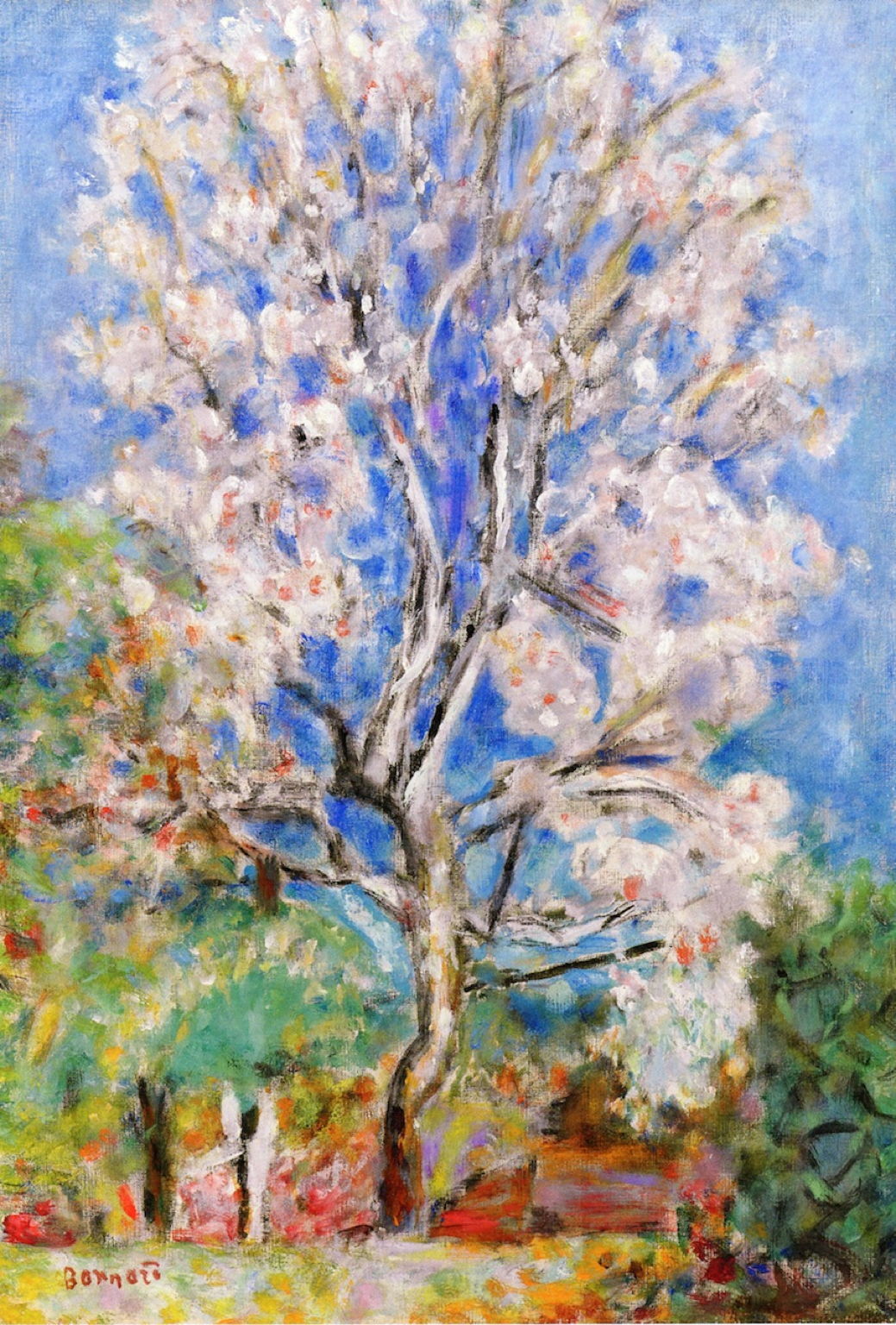
From the mid-19th century to the present day, a number of tree portraitists appear, bringing them in a variety of personal interpretations. Camille Corot is a great forest painter, and his paintings of willows along water surfaces, with the contrast of compact gnarled trunks and slender long branches, were exceptional. Gustav Courbet left several impressive paintings of trees. In his winter scenes, we can feel the cold softness of the snow, the rough surfaces of bare branches and the firm rooting of the trees. During the summer and autumn of 1891, Monet painted a series of poplars along the Epte River near Giverny. The village had sold them to a local timber merchant, but Monet paid him not to cut them down while he was painting. A series of 15 canvases that capture the changing light and atmospheric effects on the treetops was exhibited in Paris in 1892. Gustav Klimt often painted trees, and some form of sublimation is the golden ornamented Tree of Life created in 1909. Two authors from distant periods, Hildegard of Bingen and Hilma af Klint, started with botanical research from which they developed visionary depictions of the cosmic tree of the world and life. Some authors are remembered for other subjects, such as Egon Schiele; however, in addition to the famous nudes, he also constantly painted portraits of trees. Chaim Soutine repeatedly painted the large tree in the square in Vance and the trees in Ceret, sometimes under gusts of wind, so we perceive them as living beings growing and moving in front of us. When these paintings were first exhibited, critics dismissed them as too wild. Bonnard had his own garden and made a number of beautiful portraits of fruit trees. Van Gogh is remembered for his paintings of sun-burned tough olives and cypresses of Provence, as well as fruit trees in spring bloom. For Cezanne, trees formed the architecture of the world. He was particularly attracted to those that grew obliquely and yet did not give the impression of instability or stuntedness. Starting from the image of a tree and clearing it of all superfluous elements, Mondrian came up with his vertical-horizontal grids with surfaces of pure color. William Kentridge often talked about the role that trees played for him. He sees them as witnesses to history and is fascinated by the idea that the tree is hidden in the pages of the book we are reading. Abel Rodriguez (originally: Mogaje Guihu) is an author originally from the Nonuya tribe of the Amazon rainforest in Colombia. He grew up learning about the healing and life power of plants and in his youth received the title "the one who gives names to plants". He started painting when the indigenous people were expelled from their habitats, wanting to preserve the memory of the spiritual, material and emotional energy of the forest and plants. David Hockney became known for his depictions of friends in interiors and by the pools, but he also painted landscapes throughout his life. In 2008, he donated a landscape of Yorkshire composed of 50 separate canvases to the Tate Gallery that stack together into a huge painting of trees by the water. At the age of 82, during covid, he stayed on an estate in Brittany, and on that occasion an entire book was created with paintings dedicated to spring and blossoming trees, which he made partly in plein aire and partly on an iPad. He stated that trees are "like faces – everyone is different". Peter Doig paints a glance through trees that hide something from us, creating a premonition of some kind of secret or search for vague memories. The depiction of nature in the East is a special topic, and here we present the author Kaii Higashiyama, who paints using a combination of Western and traditional nihonga techniques. The paintings are created in a slow process, with several different brushes and with their own pigments, so the process is actually a kind of meditation on trees, and the same meditative, transcendent and serene impression is left by the depictions. The Cuban Tomás Sánchez paints dense forests of palm trees and other tall trees, in which he often places only one lone figure. These are landscapes of exceptional calm, almost stopped moments, and the beautiful forests look closed and impenetrable, like a world of its own, which evokes admiration and awe. Georgia O'Keeffe painted flowers with an intimate and extremely feminine look, but she also made a lot of pictures of trees. Lawrence tree is a portrait of a large tree on D. H. Lawrence's estate, painted from the lower angle with a view of the treetop and the starry sky, so that the clearing can be placed in different ways. O'Keeffe was an admirer of Lawrence's literary work, which greatly influenced her. Nature always plays a significant role in him, and trees can be a kind of doubles or counterparts of the main characters, so we will end this short review with Lawrence's poem dedicated to trees.








Trees in the Garden
Ah in the thunder air
how still the trees are!
And the lime-tree, lovely and tall, every leaf silent
hardly looses even a last breath of perfume.
And the ghostly, creamy coloured little tree of leaves
white, ivory white among the rambling greens
how evanescent, variegated elder, she hesitates on the green grass
as if, in another moment, she would disappear
with all her grace of foam!
And the larch that is only a column, it goes up too tall to see:
and the balsam-pines that are blue with the grey-blue blueness of
things from the sea,
and the young copper beech, its leaves red-rosy at the ends
how still they are together, they stand so still
in the thunder air, all strangers to one another
as the green grass glows upwards, strangers in the silent garden.